Showing posts with label Energy. Show all posts

Sunday, February 07, 2021

An interesting budget wind generator project...

A needful read, an apt analogy, and why you might just want to brush up on your sextant skills...

Here's a simple wind generator project from Low-tech Lab you might want to check out.


There is also an excellent tutorial here.

Listening to the Black Pumas

So it goes... 

Monday, January 11, 2021

On not being able to fix something...

A list of infamy, something on the subject of renewable energy, and a cartoon for those who've not been paying attention...

My Ryobi generator died this weekend due to a thrown rod.

A statement which, I suppose, will have folks sending emails telling me that if I had only bought the more expensive Honda I would not be facing the need to repair or replace the Ryobi because "you get what you pay for".

As it happens, the Ryobi generator ($500) has outlasted my last two Honda generators ($1000 each) combined at half /quarter the cost so, in my thinking, the Ryobi is a hell of a lot better than the Honda.

Of course, the problem with both the Ryobi and Honda generators is that they are simply not designed to be repaired and the cost of most major DIY repairs will cost more in time and parts than the price of replacing the generator with a new one. I won't go in to just how stupid and wasteful that sort of consumerist BS actually is but you might want to think about it.

Worse is the fact that getting the information you actually need to repair either a Honda, Ryobi, or whatever generator you might have is ultra-problematic because most companies don't want you to be able to repair their goods and seem to be dead set against selling you the needful replacement part required... Seriously, you'd think I was asking for defense secrets rather than trying to just find out what model engine my generator uses and where/how to buy parts for it.

On "So It Goes" I've made a real effort to keep stuff off the boat that cannot be user maintained and repaired or, at least, only require some common expertise such as machining or access to readily available parts or components.

Which leads us to the question about what generator I'll be replacing the Ryobi with. My first consideration is does the generator have a real shop manual. Secondly, is there solid information on the various components and are said components actually available or are they only available to affiliate repair centers?

The late Larry Pardey once said something along the lines that "If you can't fix it, it doesn't belong on your boat!" and that advice makes a whole lot of sense.

Rant over.

Listening to the Waterboys

So it goes...


Sunday, March 25, 2018

coming attractions...

Regarding some tariff exclusions, worth the read, and in the "Not so hip anymore is it?" department...

I've been thinking batteries, advancing tech, and my place in the merry-go-round that some call progress. At best, it's perplexing and at its worst one can feel the creeping tendrils of insanity knocking on the door.

I find myself in this condition because someone recently asked me about what I thought regarding someone's discussion of their new 1200 amp hour lithium battery house bank which cost out nearly $14K.

The first thing that popped to mind is that someone who needs that sort of power storage is using lots and lots of power. Looking further at their system, the fact that they have 1200 watts of solar panels pretty much underlines that theory. So, not someone downsizing to a cruising boat and a life of simplicity/frugality...

Not that there is anything wrong with their choices just that, at least for me, I find it requires a bit of mindset adjustment to better understand their thought process.

The second thing that popped to mind was that it was more than time to look at the current costs of lithium batteries for "So It Goes" and to see if they'd make sense for a more, shall we say, dedicated cheap seats cruiser. So I did some checking and boy howdy lithium batteries are still some kind of expensive.

Aboard our boat we have a house bank of roughly 400 amp hours made up of six-volt golf cart batteries. Which would cost me somewhere between $500 to $600 to replace and looking at what's available in lithium the best deal around seems to be right at $1K for a 100 ah battery...

Sure, I'm well aware that comparing amp hours/prices of lithium and lead acid chemistry is akin to comparing apples and oranges but it does give you a hazy idea of where things sit which is that lithium is just a bit too expensive for my volkscruiserish ways and means...

Still, lithium does have an awful lot of advantages...

So, what's a poor boy gonna do?

My first reaction to any product that I can't afford or justify its cost is to do research, simplify, get creative, and build it myself. Lucky for me there are already a lot of folks around who are way ahead of me and it appears that it is very much possible to build your own battery blocks and a 400 or so amp hour lithium bank is both doable and affordable without much in the way of rocket science involved.

Downright accessible.

Lithium powered VolksCruiser.

Kind of has a nice ring, does it not?

Listening to The Ramones

So it goes...

Saturday, November 30, 2013

Downsizing...

The scorecard on after T-Day shopping, what some folks were up to, and yep, enormously troubling pretty much sums this up...

The other day I overheard some advice from one guy to another that to be happy on a boat you need at least a 6KW genset and a 3KW inverter...

One of my current projects is ripping out a few no longer needed or used AC outlets and it got me thinking just how the electrical side of things on "So It Goes" has evolved.

For instance, we used to have a big 2000-watt inverter/charger which was heavy, expensive, and didn't work very well. Down the line when we realized we never ever ran anything anywhere near 2000 watts (the couple times we did I nearly fainted when I saw the numbers on our amp-meter) we replaced it with a better working, cheaper, and lighter 600-watt inverter and a separate charger which seemed to make a lot more sense.

We realized that it had been over a year since we even used the inverter. Other than tools which run off the generator, we seem to have evolved out of AC power use on the boat.

This does not mean we're camping and not using electronics or computers and suchlike, just that we've finally been able to get the various systems to work on 12-volts which is a much more boat-friendly voltage and gets away from the power loss of having to bump voltage up or down to make things work.

Of course, evolution is an ongoing affair. I'd like to add a couple of 50-watt solar panels (which would bring the grand total up to 350 watts of solar) which, with our frugal usage of power would make us 100% free of ever having to run the generator for shipboard and lifestyle systems.

That said, I'm still working on a cunning plan for the whole tool thang.

Listening to Susan Tedeschi

So it goes...


Thursday, December 06, 2012

On the cost of solar in 2012...

More about the Corexit 9500A saga, a few thoughts on justice in the waning days of 2012, and an $8 million buyout...

The other day I read an article that said something to the effect that the cost per watt of solar panels was at an all time low and that prices were still dropping...

Since I had bought a couple of solar panels (which are excellent!) about this time last year for $1.98 per watt, I thought I'd do some checking!

So, looking over at West Marine I see that their best cost per watt seems to be about $4.49... Ouch!

How about Defender who most agree is more likely to make frugal folks happy? Well, I have to admit being surprised as the best price here was a whopping $5.69 per watt

I checked a few other "marine" sources and the prices were even higher. Kind of depressing actually, but it would seem that it's a safe bet if you're buying solar from a marine store you're paying at least twice as much or more (in some case a LOT MORE!).

I then checked Home Depot, Amazon, and Lowes and the best price solar wise seems to be right in that $1.98 per watt niche.

For those who are saying to themselves...

 "Ah, but those panels are special marine panels specially designed for mounting on boats in extreme conditions so they should cost more".
Nope, I checked. Most of those panels are the same ones as sold at Amazon/Home Depot/Lowes/etc and the only difference is the mark up.

As it happens, the panels we bought last year no longer seem to be available at Amazon but these seem to be a reasonable facsimile for $1.98 per watt.

So, while I keep hearing that solar keeps coming down, I'm not seeing it in boat-size friendly panels and, it would seem, that from marine stores there has actually been a jump in price. Yet another reason to not support the marine industry.

Listening to Les Rita Mitsouko

So it goes...

Sunday, April 29, 2012

the beer be cold so you might say mission acccomplished...

A headline that caught my attention (just my take, but those who think there is such a thing as being "Too Cool" are seriously clueless and need to take a course in remedial HIP/street cred), seems to me the words Texas and justice are something of a contradiction in terms, and a student holiday is very much a needful thing...

So, the addition of another 100 watts of solar was just what was needful in the overall scheme of things. The rearrangement of the solar panels also has made for a better deployment as well... All in all, a win/win!

Unlike a lot of folks, we don't bother with a regulator(s). Most problems with solar the culprit has almost always been the regulator so lose the regulator and less chance of problems. The upside is it also forces us to keep an eye on our solar system which is no bad thing. Self-regulating mostly amounts to, if going off shopping or some such, simply upping the fridge thermostat a notch if we feel we might be close to a full charge. Hardly what you might call a hassle. The bonus is when we come back from shopping the beer is COLD!

Listening to The Wailin' Jennys

So it goes...

Thursday, December 22, 2011

"So It Goes" gets an early Holidaze present...

Crooks and Liars says something important, L,G,& M points out the benefits of child labor, and in the rarity department, some good news from Mr Krugman.

I've been wanting a bit more solar power for "So It Goes" and have been keeping an eye on solar panel pricing in the 40-75 watt zone as I don't have room for anything bigger. Sadly, the niche I'm looking for seems to be way too price stable as I keep seeing big panels come down in price while the smaller more boat friendly ones remain quite pricey at cost per watt...

The other day, we actually decided to just bite the bullet and simply buy a pair of 50-watt panels and actually found getting folks to take my money and ship panels to the USVI was no easy task.

Looking at panels on Amazon, we discovered a 50-watt panel for $99 and they did not seem to have any hassle with shipping two panels to the Caribbean via US Mail for less than $25... So we bought a pair and five days later (we ordered last Friday afternoon and received them Wednesday) have them on our boat... YOWZA!

Just a quick aside to say how Mr Zip is the cruisers friend and for those US voters who read this should all drop a line to your Rep and Senator and tell them the US Postal System is a good thing.

The panels are quite nice and construction is excellent. The first thing I noticed was the frames were even nicer than our existing BP panels which makes mounting them a lot easier.

Now, for $99, the actual cells are not cutting edge state of the art but they are not visibly old tech either. I'm guessing they are last year's tech which is just fine as far as I'm concerned because 50 watts is, after all, 50 watts!

Listening to Warren Zevon

So it goes...


Tuesday, October 18, 2011

Sail power and suchlike...

On blaming the victims, Kunstler muses about a window yet to be broken, and for those thinking things can't get any worse, think again...

Way back when, Tom Colvin said that a good rule of thumb for an auxiliary engine in a sailboat was about one HP per ton... Over the years I've come across no compelling evidence that Mr Colvin was wrong, so for the moment let's just say that one HP per ton is a good starting point.

So here is a question you might want to ask yourself... What sort of HP does your sail area produce?

In our case, the CAL 34 with its Simplicity rig (basic working sail area of 592 sq feet) horsepower figures look something like this...


8.5 HP @ 10 knots of wind, 11.5 HP @ 14 knots, and 23.5 HP @ 20 knots
For what it's worth the rig as designed by Bill Lapworth (basic working sail area of 515 sq feet) works out like this...
7.5HP @ 10 knots of wind, 10 HP @14 knots, and 20.6 HP @ 20 knots
Right around 20 knots of wind is where "So It Goes" tells us she'd be happier with a reef so, for all practical purposes, our rig tops out at 23 HP.

For those keen on checking their rigs HP the formula is HP at 10 knots of wind = .015 X square feet (use .020 for 14 knots and .040 for 20 knots). Not perfect but it is accurate enough to tell you what you need to know.

The CAL34 having just a kiss less than five tons of displacement would, under Colvin's suggestion, need a five HP engine though our Electric Yacht motor delivers 8HP @48V and the Atomic 4 it replaced produced  about 15HP in normal use (30 HP @ 3000 RPM) and due to it's ill performing stock prop I doubt it actually ever delivered more than 10HP of thrust.

So, when all is said and done the actual HP for the standard Atomic 4 is not all that out of line with what Colvin suggested... In fact, we have powered "So It Goes" with a 5HP outboard on several occasions and found it worked just fine...

The conclusion that I draw here is that 1HP per ton works but there is nothing wrong with a "little" extra oomph but that exceeding the horse power of your sail rig does not make a heck of a lot of sense unless you really want a motor boat.

The French, who know a thing or two about sailboats, call motorsailers "50's" (seldom used as a positive) to designate that they share sail and power at a 50% ratio. These days, with cheap HP available, nearly all modern sailboats would qualify as motorsailers... Something to keep in mind.

By the way the books "The Propeller Handbook" and "The Nature of Boats" by Dave Gerr have all the needed info to help sort out your rig, engine/prop, and HP questions.

Listening to Spirit

So it goes...


Tuesday, September 13, 2011

Batteries not included of course...

Robert Reich debunks some lies while making some sense, an interesting method to learn a language, and some seriously scary shit... when was the last time you inspected your rig?

Not too long ago I was discussing backup power scenarios with a boat friend who was trying to sort out a method to have a fail-safe system that in case his battery bank died, generator failed, solar cells blew off and his wind generator lost its blades, he'd still be able to keep his important 12-volt systems ticking over...

As I recall, many various and (mostly) expensive plans were floated from a spare genset to a completely separate and autonomous system.

Of course, the fear of being powerless is somewhat primal and I can certainly understand that having some sort of backup system makes sense and even allows one to sleep a bit better which is no bad thing.

My answer to the power backup system may not be for everyone but I'm pretty sure it will work for me. So, just in case you're interested, here's the key...

It's a battery holder for eight AA batteries which provides 12 volts...


Yowza!

It's not as cheap as I'd like (but nothing is, is it?) at $2.95, but for under $30 you can buy ten of them which, used with some thought, could run the needful stuff on most boats so you could get where you needed to. Adafruit has them if you feel like picking up a few...

Admittedly there is some cobbling that will need to be done to make it all work. I'll need to add Anderson Power Poles to the battery holders and the key systems I need to keep running but as I had been planning on using Power Poles on all instruments and important systems, this is no biggie. You'd also need some batteries and a AA charger (I'm thinking solar for this) but that is grist for another post...

Listening to the Isley Brothers

So it goes...

Monday, August 29, 2011

A few pennies here and there and you can save some serious money...

A little Proa Madness, the price tag on what it costs to sow hate, and yet another storm wending its way towards someone somewhere...

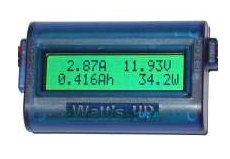
Since I'm in the process of testing a new wind generator I thought it would be nice to install a dedicated power monitor to the circuit so I could get some serious feedback in terms of how many amps and amp hours it provides along with the voltage at various wind speeds etc...

Now being on a boat, one is tempted to look at marine meters or suchlike if for no other reason to establish a base to compare better stuff to...

Now, a lot of readers are aware that we have a Xantrex-free boat and that, as far as I'm concerned, it was a happy, happy day when we excised the last bit of ill-performing Xantrex gear off "So It Goes", but since it is the usual suspect in things energy related I always check to see what it costs... In this case, a whopping $243 at discount.

Looking around, I find a much better unit which would handle almost everyone's energy monitoring needs on a boat in the Doc Wattson digital meter over at Power Werx for just shy of $60...


This is however somewhat overkill for my needs for a dedicated energy monitor for a wind generator so I checked for something cheaper and found the little sister unit "Watts Up" to the Doc Wattson on Amazon for a kiss less than $50...

Looks like just the thing!

Listening to an Eagle's cover

So it goes...

Wednesday, August 17, 2011

Death of a thousand cuts...

Waves for Water keeps on fighting the good fight, a must read if you don't want to start paying $35 (or worse) every time you need to mail a letter, and why does this ad for a car make me think about the core difference between sail and power boaters?

The other day I was reflecting on something Jay Fitzgerald said about the whole sustainable thing and as always, he seems to make a lot of sense...

Use less.

A lot of us on boats get hooked on a vicious cycle of thinking we need more and as a result you find folks on small boats with energy demands and production that would keep a medium-sized village going, and every last one of them seems to want MORE...

On "So It Goes" the biggest draw on power is our three Apple computers which surprises people as most assume it is the electric propulsion. You might want to reflect on that for a moment.

Electrical budgets are a lot like monetary budgets... We tend to budget for the big stuff and at the end of the month wind up getting poleaxed by the little stuff we did not quite think through or keep track of. For instance, if you decide to buy something that costs a couple of hundred dollars you give it some thought and work it into your budget. While on the other hand, you don't quite factor in the $3.50 cups of coffee at Starbucks and at the end of the month a couple of cups of coffee a day add up to $210... How'd that happen?

With power systems on boats it is always the little things that get you because they add up. That little muffin fan in my composting toilet that has been running 24/7 for over two years while only drawing milliamps does add up and combined with the fridge at 2.5 amps per hour plus the ipods and... and... and... and all of a sudden twin wind generators, four 100 watt solar panels and a 6KW genset start seeming like a really good idea.

Or then again, maybe you could simply use a little less...

Listening to Southside Johnny

So it goes...


Friday, May 27, 2011

An interesting book...

Like a lot of people, I keep looking at the new battery chemistries with great interest. Actually maybe more than some, as having electric propulsion, I may be just that little bit closer to being watt-centric than most.

I expect the two lead-acid (Trojan T-106's) battery banks aboard "So It Goes" will be good till 2016 or thereabouts. I would be very surprised if when it's time to replace them that lead acid is even in the running, with the price of lead acid batteries going up and lithium chemistry batteries coming down...

At the moment according to my inner "spidey sense"  the new batteries don't quite live up their claims on a cost/utility/longevity basis but it seems it's getting closer. So at the moment since I have some years of lead-acid energy in hand to wait it out, I don't feel the need to jump quite yet and lead-acid is more than up to doing the job for the moment.

That said, I'll admit to not really knowing what makes the new batteries tick as most of the information I receive about them is from people having a vested interest in selling me their new/better battery and I expect them to tell me whatever they want whether it is true or not... Trust, my friends, where money and profits are concerned, is not my strong suit.

Which is why I was excited to see "Bottled Lightning: Superbatteries, Electric Cars, and the New Lithium Economy" pop up on my books-to-read list. While I don't expect it to answer all my questions, it's a start...


Listening to Pearl Harbor and the Explosions 


So it goes...

Monday, March 14, 2011

Evolving trends and situational awareness...

Dmitry Orlov makes a whole lot of sense on his post today... Really a must read.

Yesterday while we were having lunch before shopping we watched the CNN European feed. The shots in Japan of people in long lines for water and empty markets underlined the fact that taking any needful commodity for granted could be problematic in the interesting times we find ourselves in.

Orlov's decision to keep a year's supply of fuel on his Hogfish is easier than for most folks as he has already pared down to a pretty minimal usage and his year's supply would hardly make a dent in some cruisers dinghy energy budget, much less their diesel needs.

On the other hand, we have noticed Dmitry is not alone as in the last couple of years, the "outboard of choice" has evolved from the ubiquitous 15HP to the more sedate and fuel friendly 5Hp for daily use. I might also add that the standard RIB is no longer quite the standard it once was and as a result rollups or hard rowable dinghies are making a real comeback.

Might want to take notice...

Listening to "Beer or Gasoline"

So it goes...

Thursday, March 10, 2011

A very cool stove/heater...

With the cost of oil and gas on the rise again, the idea of having a solid fuel stove/heater onboard to back up the propane system would seem like no bad idea...

Part of the problem with solid fuel heaters and stoves on boats is that, for the most part, they are more decorative than functional and somewhat pricey... Dickinson and SIG both make a bulkhead heater that is OK and produces some needful heat but falls short on the stove side but will keep a coffee cup warm...

Which brings us to the Shipmate small cast iron sort that you can really use as a stove as well as produce a hellacious amount of dry heat which is no bad thing on a boat. One of my best memories was sitting on a Benford Dory in Paris with six inches of snow on the deck drinking hot cocoa, eating skillet bread, and being warm... The boats Shipmate "Skippy" doing its thing...


The downside of the "Skippy" and other cast iron stove/heaters is that they have a rather large footprint and can be problematic space wise on a small boat as well as being a seriously heavy hit on the pocket book.

But they sure look "shippy" and inspire all sorts of confidence... Don't they?

I've mentioned before that maybe the best option would be to build a "rocket" stove and cobble together some sort of "shippy" means of mounting it within a boat  along the lines of a bulkhead or floor mounted heater.

The Stovetec solid fuel stoves developed for the third world seem to be just the thing and, truth be told, not entirely un-shippy looking when you take a moment to look at it...
Being a rocket type stove it will produce much more heat using less fuel and that makes all kinds of sense on a boat where solid fuel storage is somewhat problematic. Better yet, it is inexpensive and buying one helps a good cause... Kinda works for me!


Tuesday, February 15, 2011

On having a solar installation that is not dumb...


I've been having some battery issues on my MacBook of late and it has me thinking quite a bit on things electrical aboard "So It Goes"...

When all is said and done, we have a very modest power use and if we were to add another hundred watts of solar we'd more than likely be in balance. The issue at hand is that finding space for that extra hundred watts of panel is some kind of problematic.

So I keep an eye out with the other boats that anchor near me looking for that cunning installation plan that brings on a Eureka moment. But, it is simply not happening...

Part of the problem is that most solar arrays on sailboats are of the "how-dumb-is-this" variety as they are rigidly mounted allowing only partial use of the panels' output except for an hour or two as they are simply not facing the sun at a happy-making angle. Other panel installations I see on a regular basis have panels under permanent shadows from booms, radars, and wind generators.

Luckily, for us, when the Honda gave up the ghost we had to go back into "solar mode" and orienting the panels to face the sun about three times a day which more than doubled the output and reminded us just how important pointing the panels at the sun actually is... We'd become lazy and forgotten just how many amps a day we were pissing away as a result.

So, the next project energy wise is doing a couple or orientable solar mounts based on the most excellent solar tracker design by James over at Atom Voyages.

Listening to Charles Brown (with a little help from Johnny and Shuggie Otis)

So it goes...

Wednesday, June 30, 2010

More DIY goodness...

One of the best ways to save money on this whole boating gig is simply to do your own work and build/fabricate high ticket items whenever possible...

Wind Generators and Self-steering gears are two such items as they are not expensive or difficult to build yet if bought are a serious gouge in the budget.

Not exactly rocket science is it?


Maker Workshop - Wind Power Generator on MAKE: television from make magazine on Vimeo.

Friday, June 25, 2010

Moving targets...

I catch no small amount of flack on being so pro electric propulsion but then again, so did those who were pro internal combustion engine way back when the only proper way to get around was hay driven vehicles... So it goes.

One argument I hear a lot is that electric tech is simply not there and won't be for like ever. Which is silly but then again most of the people using said argument have never even seen an electric propulsion system but it does bring up the word... progress.

Inboard diesels have pretty much reached their zenith and if you decide to replace your Perkins or Yanmar most likely you simply replace it with the same old same as not a whole lot of development is being done on small marine diesels. Small diesels have pretty much reached a stasis point and from here on you can expect the same old same to be what you get. Of course, not a lot wrong with the same old same as those pooh-poohing the newfangled internal combustion engines would point out that that while you may not be able to find fuel for your IC engine you could find hay and horse shoes everywhere...

Electric drives, on the other hand, are a moving target and down the line if you need to replace a motor or controller you will more than likely find that replacement parts will be a big improvement over what you are replacing... more energy efficient, more horsepower, and more than likely, less expensive as the economics of scale take hold costs will come down.

One of the reasons I chose to replace my old system with an Electric Yacht is that they have a vision of what they want their system to be and are working hard to make it happen and constantly improving and upgrading their products while keeping everything as backward compatible as possible. Case in point the new brushless motors Electric Yacht is using raise the bar that little bit more. Even more important is that EY is also working hard on the other aspects of electric usage on boats and in the not too distant future it won't simply be electric propulsion we are talking about but an entire integrated electric system that includes everything from charging to all onboard electrical needs.

Progress is good...

Monday, June 21, 2010

DIY goodness...

Prices just keeping getting silly on boat gear and the idea of spending $1000 or more for a wind generator, considering what they actually are, is just a little bit crazy...

Makes you want to wander over to Yachtwork and check out their DIY Wind/Tow generator and get the tools out!

Friday, March 19, 2010

Now we're talking... fuel cells start making sense!


As an electric propulsion guy I've been following various fuel cell systems but so far they have been expensive with a high kludge factor and either too big or too small to make sense on a boat...

Oorja Protonics, has a methanol model set to hit the streets in a few months that looks very interesting being no bigger than a comparable marine gen set (5KW) and with a rumoured price of less than $15,000.

Do I hear an AMEN?

Friday, February 26, 2010

The right plug rant...

Trying to make sense of a boats electrical system can, for want of a better word, make you nuts...

... and we are not talking minor league nuts, we are talking full blown foaming-at-the-mouth-profanity-spewing-cutting -a-hole-in-the-bottom-of-the-boat-because-it-seems-like-a-good-idea-and-Palin-starts-looking-like-the-answer-to-our-problems-and-as-soon-as-you-sink-your-boat-you'll-volunteer-for-her-campaign-because-it-is-more-sane-than-dealing-with-your-boats-electrical-system nuts!

Yeah... Seriously nuts!

A big part of the problem is that no one really makes marine products of an electrical nature... Oh sure, they say they do, but when you factor in the various ill-chosen metal combinations (how many different metals can we put in this product?), undersized and untinned wiring, mixed of course with components that are simply not up to any enviroment much less one where salt and humidity is part of the normal day to day.

My pet peeve and foaming-at-the-mouth trigger are connectors/plugs... A couple days back we went to the local chandlery and the only plugs they had looked like this...


To say that your basic cigarette lighter plug  is the worst possible way of connecting a device to power on a boat is something of an understatement. However, it is a great means of driving you around the bend so if you have someone you really, really dislike you might want to get them a dozen for their birthday!

A real connector on a boat should not depend on friction alone, have reasonable metal in the wire to pole section and have self-cleaning and robust contacts. In a perfect world the wire to contact connection would not involve tiny screws of dissimilar metals that become immovable due to corrosion while not providing a solid contact.

Enter Anderson Power Products who make a line of connectors dubbed "PowerPole" and they look like this...

... What's really neat is they lock together so it is easy to build wiring looms (for example, if you have six wires going up your mast instead of having three to six connectors you can make a single mast plug). How cool is that?

They go together with a simple crimp, handle power from 10 to 180 amps, have no dissimilar metals, are color codeable and because they are a simple industrial product used in the millions, they are affordable... What's not to love?

With the right plug... (dare I say it?) I could rule the world...